


Start with the Cause
Separate a plumbing, tank, pump or field problem.
Olympia Septic Services is the #1 septic in Olympia, WA. We handle septic tank pumping, septic tank cleaning, septic tank inspections, septic tank repairs, septic tank installation or replacement, and drain field services. Servicing the greater Olympia area.
We have over 22 years of experience handling installation, oversight, and business development. It's important to start with the cause, then choose the right service. Thurston County soils, seasonal groundwater and your approved system design guide the work.
Separate a plumbing, tank, pump or field problem.
Gravity and treatment systems need different care.
Confirm access, diagnosis, disposal and restoration.
Use records, bedrooms, soil and groundwater.
Understand repair before deciding on replacement.
Save reports, pump-out dates and the approved drawing.
Start with the service that matches your need. If you are unsure, describe the symptoms.
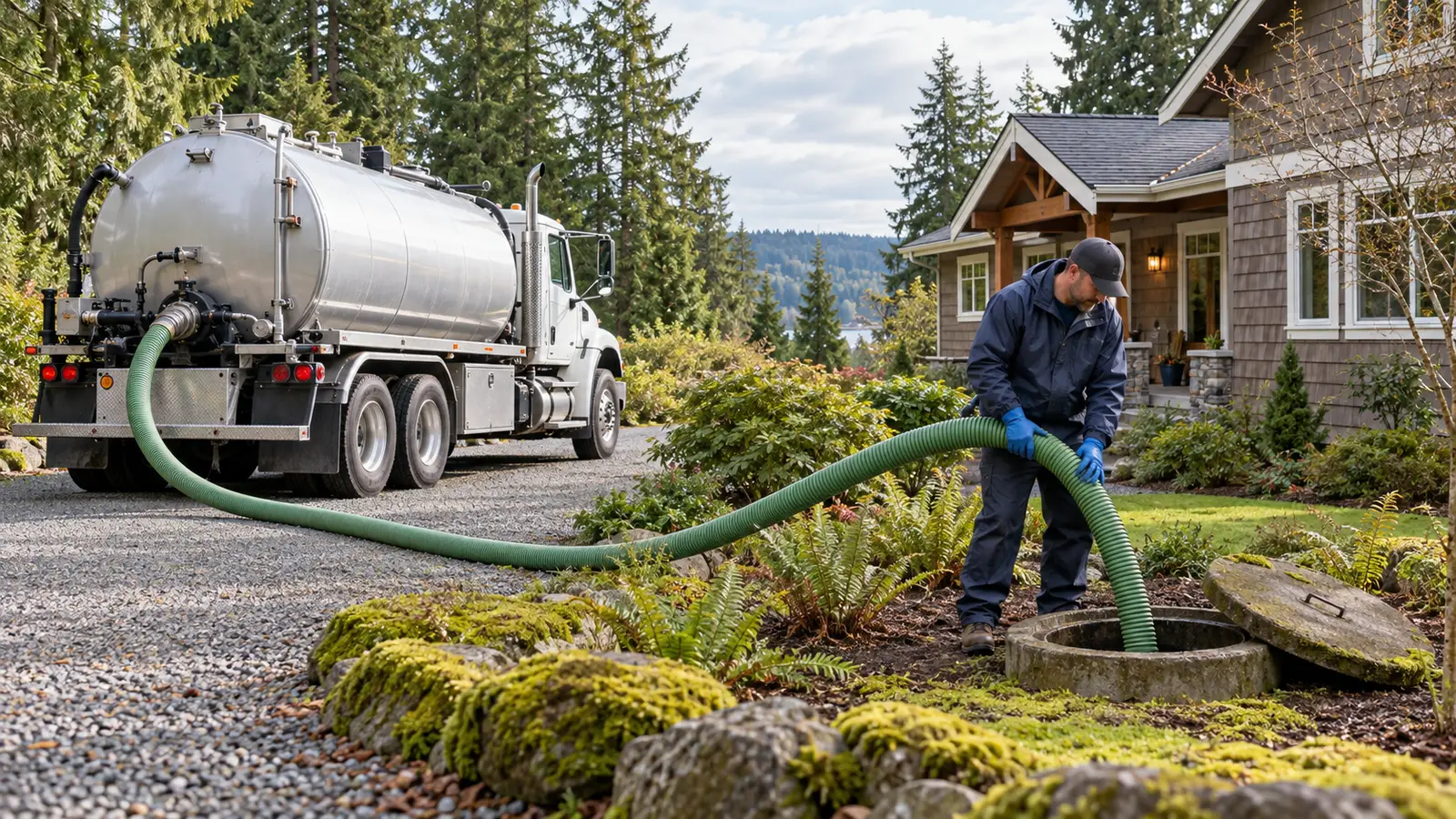
Routine care, a recurring backup or a new system: each starts with a clear scope and the property’s actual needs.
Remove built-up waste. Confirm tank capacity, lid access and the last service date.
Explore Septic ServiceRemove residue after pumping. Ask whether wash-down and deeper cleaning are included.
Explore Septic ServiceCheck accessible components, records and symptoms before buying, maintaining or repairing a system.
Explore Septic ServiceAssess lids, baffles, filters, connections and pumps before deciding whether replacement is needed.
Explore Septic ServiceChoose the tank, treatment and field as one approved design. Check soils, seasonal groundwater and sewer availability first.
Explore Septic ServiceDescribe the backup and request urgent service. Availability is confirmed separately.
Explore Septic ServiceA tank can be sound while the field struggles. Review distribution, soil and groundwater before deciding on repair or replacement.
Separate damaged distribution parts from soil and groundwater problems before choosing repairs.
Explore Drain Field ServiceInvestigate wet spots, odors and recurring backups using records, distribution checks and site conditions.
Explore Drain Field ServicePlan a suitable treatment area when repair is not enough. Review the tank and sewer options too.
Explore Drain Field ServiceStart with the floor plan, system record, sewer availability and site conditions before choosing a tank or replacement field.
The listing-size figure is a county market benchmark. It does not measure every Olympia home or septic property. Use the permitted bedroom count and actual system record for septic planning.
Check sewer availability and records. A licensed designer or engineer evaluates the site and prepares the application. County soil review, conditions and seasonal groundwater studies can extend the schedule well beyond the initial allowance. Obtain approval before installation.
What looks like a tank failure can start in the drain field, the plumbing or the way the property uses water.
Missed pumping or a damaged outlet can clog the field.
Leaks and heavy use can exceed the approved demand.
These obstruct flow and can disrupt treatment.
Seasonal groundwater and roof drainage reduce field performance.
Roots enter openings; vehicles crush pipes or compact soil.
Failed pumps, alarms or treatment parts need timely service.
Compare septic types, tank sizes and the permit steps in a few clear sections.
1,994 sq ft was Thurston County’s median listed-home size in September 2026, from Realtor.com via FRED. It is not an average of all homes or septic-served properties.
For septic planning, use permitted bedrooms and approved use. A 2,000-sq-ft house does not automatically need a particular tank. Additions and ADUs need review.
| Bedrooms | Tank minimum |
|---|---|
| 1–4 | 1,000 gallons |
| 5 | 1,250 gallons |
| 6 | 1,500 gallons |
WAC 246-272A-0232 now sets a 1,000-gallon minimum for up to four bedrooms, adding 250 gallons per bedroom after that. It requires at least two compartments. This rule took effect April 1, 2025; older 900-gallon charts are not the current new-system minimum.
Existing tanks may differ. Use the permit and record drawing. Storage gallons, daily design flow and a separate pump chamber are different measures.
A rigid, heavy shell. Check walls, joints, covers and lifting access.
A lighter composite shell. Approved support and backfill protect it.
A lightweight molded tank. Burial and groundwater limits are model-specific.
Use a registered, approved model and its installation instructions. No reliable public inventory establishes Olympia’s average tank size or material share. Tank shells, fields and mechanical equipment age differently.
Settled wastewater flows into suitable native soil. Adequate soil and groundwater separation are essential.
A pump doses the field through a distribution network. Controls and alarms need maintenance.
An engineered raised sand area provides treatment space where a conventional field may not fit site conditions.
Added treatment comes before disposal. Product-specific service, power and monitoring may be needed.
Thurston guidance also addresses sand-lined trenches and Glendon biofilters. These are design options, not interchangeable upgrades or proof of suitability for your parcel.
Winter saturation can reduce the field’s ability to accept and treat wastewater. A site may need seasonal groundwater study. Keep roof drains and vehicles away from the field and reserve area.
The state baseline is three-year inspections for tank-plus-gravity-soil systems and annual inspections for others, unless more frequent care is required. Pumping follows measured solids. Thurston’s 2026 Glendon update requires annual certificate renewal and a Glendon-certified professional.
Before a septic property sale, complete Thurston’s Time of Transfer process. The County requires inspection and all tanks pumped within the prior 12 months before application.
Check sewer availability, hire the proper designer or engineer, and submit the County’s required applications and site plan. Meet approval conditions before installation; finish with inspection and an accepted record drawing.
Allow 4–6 business days only as an initial planning placeholder. It is not a County service standard. Missing records, design, corrections and seasonal studies can take much longer.
Practical answers for Olympia homes and businesses.
The current Washington single-family minimum is 1,000 gallons. The approved design or existing installed tank may be larger.
Options include gravity, pressure distribution, mounds, sand filters and registered treatment products. Your records identify the actual system. No local market-share estimate is assumed.
The state baseline is at least every three years for tank-plus-gravity-soil systems and annually for others. Follow stricter local or permit requirements.
Seasonal groundwater, runoff or a leak can overload the disposal area. Another pump-out cannot lower groundwater.
Thurston’s 2026 updates require annual operational-certificate renewal and a Glendon-certified professional for these systems.
The 4–6-business-day figure is an initial planning allowance, not an official County turnaround. Design, corrections, site review and wet-season studies can extend the project.
No. Reduce water use during an active backup and obtain prompt professional help. Online requests do not confirm a service time.
Tell us where you are, what is happening and the service you need.